Today’s update includes info on two writing contests, places to submit, how long a book should be if you want to get it published, and serializing your book to make money. Hope you find something useful here!
Ploughshares, the literary journal of Emerson College, is running an Emerging Writers Contest, with a submission deadline of May 22 at noon EST. The contest is open to writers of fiction, nonfiction, and poetry who have yet to publish or self-publish a book. Read past winners of the contest here. They award publication, $2,000, a review from Aevitas Creative Management, and a 1-year subscription for one winner in each of the three genres. Submit to the Emerging Writer’s Contest through our submission manager. Full details here.
 The Indie Author Project Annual Contest is open for submissions until May 31. Through this contest, libraries help indie authors get the recognition they deserve for writing great books. The contest is a powerful way to elevate an author’s career powered by the library community. Details and submission guidelines here.
The Blood Pudding is looking for submissions for its online journal. They accept rolling submissions and publish when they have enough items to publish (generally once every two months. They want “raw voices, stories about the human condition, and untold perspectives.” They plan to publish new submissions in their next issue and you can check out their last issue at thebloodpudding.com and submit here.
Author’s Publish recently mentioned Tilbury House, a press based out of Maine that publishes children’s books including board books, beginning readers, picture books, and middle-grade titles. They’re accepting submissions now and have published some very successful children’s books, including Talking Walls, Sheila Says We’re Weird, and Playing War. Each has a focused message involving a social issue. You can get a feel for their catalog as a whole here, and their submission guidelines here.
 The length of a novel is something I get asked about regularly, particularly by writers working on their first one.: General fiction – 80-90,000 words. N.B. Literary fiction can vary, depending on the story. Speculative fiction, including sci-fi, dystopian, and fantasy—up to 120,000 words, because of the world-building involved. Plus, readers in this genre enjoy and expect longer books. Romance – 60,000 words. Novella (becoming more popular) – 40-50,000 words. Some novellas are shorter (25,000 words or so), particularly those published as ebooks only. Short stories vary quite a bit, but are usually under 5,000 words, flash fiction up to 1000 words, and micro fiction is usually around 100 words.
 The decline in page numbers is borne out by figures from Dave Chesson at Kindlepreneur, who runs Publisher’s Rocket – a way to figure out which categories your book should be in, among other things. A recent email from him talked about the declining length of novels, particularly in paper editions. As with all statistics, it pays to ask some questions. Dave considers the possible reasons to be rising printing costs, changing preferences in physical book trim sizes (larger pages fit more words), and/or the growth of shorter specialized books like puzzles and coloring books. The length of a book affects the production costs and therefore the price of the end product. Anyone self or hybrid publishing might want to take this into account when submitting their book for publication.
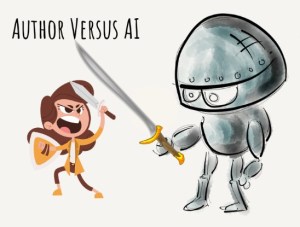 Technically, this means that Alison McBain, who has started on her most ambitious project yet –Author Versus AI – to write 52 books in 52 weeks, is writing novellas. She’s defining a book as 40,ooo words or more, and has already written three. Not only that, she’s made some short videos with reading from the books, so you know they really exist. Follow her here to find out how she’s getting on.
If you’ve decided to forego the agent query trenches and seek a press that accepts unagented work, here’s a checklist to help you compile a submission list you can feel confident in as you prepare to pitch without an agent. The post, via Jane Friedman, is by author, editor, and book coach Julie Artz (@julieartz). Download her Craft Your Query Workbook.
 Serialized books are becoming a viable and ever more popular option for writers as it becomes harder to find a spot in the marketplace. We discussed various ways of earning money from your books by having readers buy them on subscription – they get one chapter at a time with a subscription, and you get their email address too, to add to your list. there are several ways of doing this. Here’s an article from The Write Life, a self-publishing platform, on the benefits of doing this via Substack. Medium can provide a similar platform. Books on the Wall has an article with an infographic on the most famous serialized novels, from Alexandre Dumas via Harriet Beecher Stowe and Dickens to Isaac Asimov and Hunter S. Thompson, so the idea is not new. You can serialize a novel on apps like Radish (for romance novels), Royal Road (tending to fantasy), and even on your own website, though this won’t have the advantage of readers being able to find you as they browse the other titles.
Worth thinking about! And thanks to member Libby Waterford for her help on this subject.


