
This post includes a couple of conferences in September, advice on indie publishing, some new software for writers, and an unusual writing contest.
The Westport Library’s annual StoryFest – the largest annual literary festival in Connecticut and one of the biggest in the Northeast — will be held Friday, September 20-22. Among the featured authors are acclaimed author, essayist, and editor Roxane Gay (Bad Feminist, Difficult Women), best-selling writer Christopher Golden (Hellboy, The House of Last Resort), and award-winning author Claire Messud (The Emperor’s Children, This Strange Eventful History), plus many more. This free event will also feature a PitchFest workshop delivered by Bloom Writers’ Studio. More details here.
If you write picture books, middle-grade books, or young adult books and you’re eager to make genuine connections with agents and writers in your genre, you should consider the online Gotham Writers Children’s Lit Conference, happening September 28-29. On Day 1, attendees will experience a series of panels on Zoom populated by some of the best and brightest writers and agents in the industry, including a keynote interview with New York Times bestselling author, Maureen Johnson. On Day 2, writers will participate in pitching roundtables for picture books, middle grade, or young adult projects. Two roundtables will be in-person in NYC, and the rest will be held on Zoom. Full details here.
The Independent Book Publishers Assn has published an interesting Publishing Map that includes eight different publishing models: Association, Society, & Non-Profit Publishers, Author Publishers, Corporate Trade Publishers, Higher Education & Academic Publishers, Hybrid Publishers, Independent Publishers & Small Presses, Service Providers, and University Presses. Check it out here.
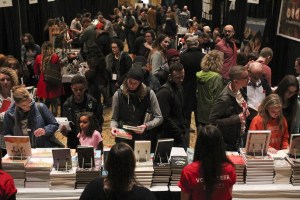 Here’s a tip from Jane Friedman. Multi-author book signings—the kind hosted in convention centers, almost like a fan convention—are becoming a thing now. So much so there’s a service called Beventi to help authors with pre-orders for these signing events. The site also maintains a list of such events if you’re interested in meeting favorite authors or learning about new ones.
If you are just starting to submit your work to literary journals, or perhaps you just want to avoid rejection, this list, 25 Approachable Literary Journals, from Authors Publish is for you. All of the literary journals in this list accept at least 20% of what is submitted to them, and many have a much higher acceptance rate. So the odds of your work being accepted just went up. Sign up for their email to get regular submission suggestions.
Jane Friedman provides lots of new suggestions and ideas in her newsletter, Electric Speed. Here’s one I’ve tried and liked. It’s a new note-taking app, Duck, available for Safari on iOS, Windows, Chrome on Android, Windows, Mac, etc, Edge on Windows. It lets me make notes – in my case with ideas I have for my writing. I can use it offline, and in theory, chat with other members. I won’t be using it for that, since I have too many chat apps already, but I’m enjoying having written notes that I won’t forget because I can return to them. And it’s free.
Here are a couple of writing sites you may find useful:
For checking on potential agents and publishers, check the conversations at the Absolute Write Water Cooler.
For feedback on your poetry, join the free meeting run by member Alison McBain, the Poets Salon. Their regular meeting is on the second Saturday of the month on Zoom, and Alison also provides a monthly newsletter with tips and events for poets (a bit like this one, but poetry focused).
Alison (a famously speedy writer) also recommended entering a shorter version of NaNoWriMo, the Three-Day novel-writing contest. It asks you to write 100 typed, double-spaced pages (roughly 30,000 words) between 12.01am on August 31- 11:59pm on September 2. Once written, you mail a paper copy to Vancouver, Canada. The deadline for packages to arrive is September 13. Early bird entry fee is $45 until August 2, and $50 thereafter. Full rules here.
Member Libby Waterford contributed to the discussion about how to plot a memoir, although this suggestion can work with any creative nonfiction or fiction. Here’s what she said: “Think about what trope(s) you’d be interested in exploring. All books have tropes, and if you can identify one or more that might be relevant, you can look to the trope for a plot structure. I love this website for learning about tropes: tvtopes.org
See you next month!


jill amadio
July 24, 2024 - 6:41 am ·Thank you, Gabi. Your posts are always brimming with great suggestions and outlets for writers.
Gabi Coatsworth
July 24, 2024 - 8:45 am ·Thanks, Jill!