Here’s part 2 of the April updates for writers…
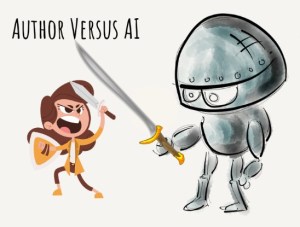 Alison McBain, a poet and author, has produced her monthly list of poetry events, open mics, and places to submit your work. Check it out here. She does this in addition to running her Author Versus AI project. She’s out to prove that a live person can write better books almost as fast as AI, and has written over 30 in the last year.
Here’s yet another interesting take on AI and writers. Jane Friedman has published an article by Teri Case about why it’s a good idea to trademark your name and how to do it. It’s not exactly easy, but it does mean that you can have AI take down your book if they upload it. Check this article by The Atlantic to find out whether your books have been pirated. (Keep scrolling until you get the search tool – LibGen.)
 BookBub offers discounted eBooks to members every day via email. You choose your preferred genres, and they send you good quality books at a fraction of the listed price. You can also follow authors you like (including me), and they’ll notify you when they have a special deal on their books or a new book coming out. They’re now offering a way for authors to make websites by creating a custom website or landing page in minutes with templates and tools designed for authors at every stage. Get started here for free.
If you’re a writer of children’s books and not sure where to send it for publication, Authors Publish has a list of 56 traditional book publishers looking for submissions – no agent required.

 I always tell my writing friends to research any publisher they plan to submit their book to. Small traditional publishers and hybrid publishers vary considerably in how they work, the quality of the books they produce, etc. When it comes to writing awards, knowing which are worthwhile needs some research, too. Deciding which indie publishers and awards contests are worth submitting to can be challenging at best, but the Alliance of Independent Authors rates awards contests here. They provide information about the contests, including how much it costs to enter, and rank contests as Recommended, Mixed, or Caution. They do the same for indie publishers. WriterBeware has a free newsletter that covers scams, fake literary agencies, and more. Sign up for their free newsletter here.
 The literary journal SmokeLong Quarterly publishes flash narratives up to 1000 words. They consider reviews of flash collections, essays on craft, and articles on teaching flash for the blog, but not poetry. Submission guidelines here. Submissions for the June Issue are open until May 10. They are dedicated to bringing the best flash narratives to the web quarterly, whether written by widely published authors or those new to the craft. BTW, the term “smoke-long” comes anecdotally from the Chinese, who noted that reading a piece of flash takes about the same length of time as smoking a cigarette. SmokeLong Quarterly does not encourage smoking.
 Last but not least, NaNoWriMo is closing down. Long a staple of writers who need a deadline in order to force themselves to write, the program has been around since 2010, when it was started by a group of friends determined to challenge each other. Recent challenges have had hundreds of thousands of participants, who’ve attempted to write a novel of 50,000 words in 30 days every November. James Folta of Lit Hub explained it this way. “The nonprofit has had some challenges in recent years, stemming from both money and missteps. Arts nonprofits seem always to be struggling for cash, but NaNoWriMo’s troubles were made worse after it was scrutinized for some inappropriate behavior by volunteers and moderators, and then more recently for its equivocating stance on AI.”
Those who find it easier to write to a deadline need not despair, however. I am certain replacement challenges will be springing up everywhere. With any luck, they’ll take place in longer months and have a lower goal in terms of words. When I find them, I’ll let you know.


